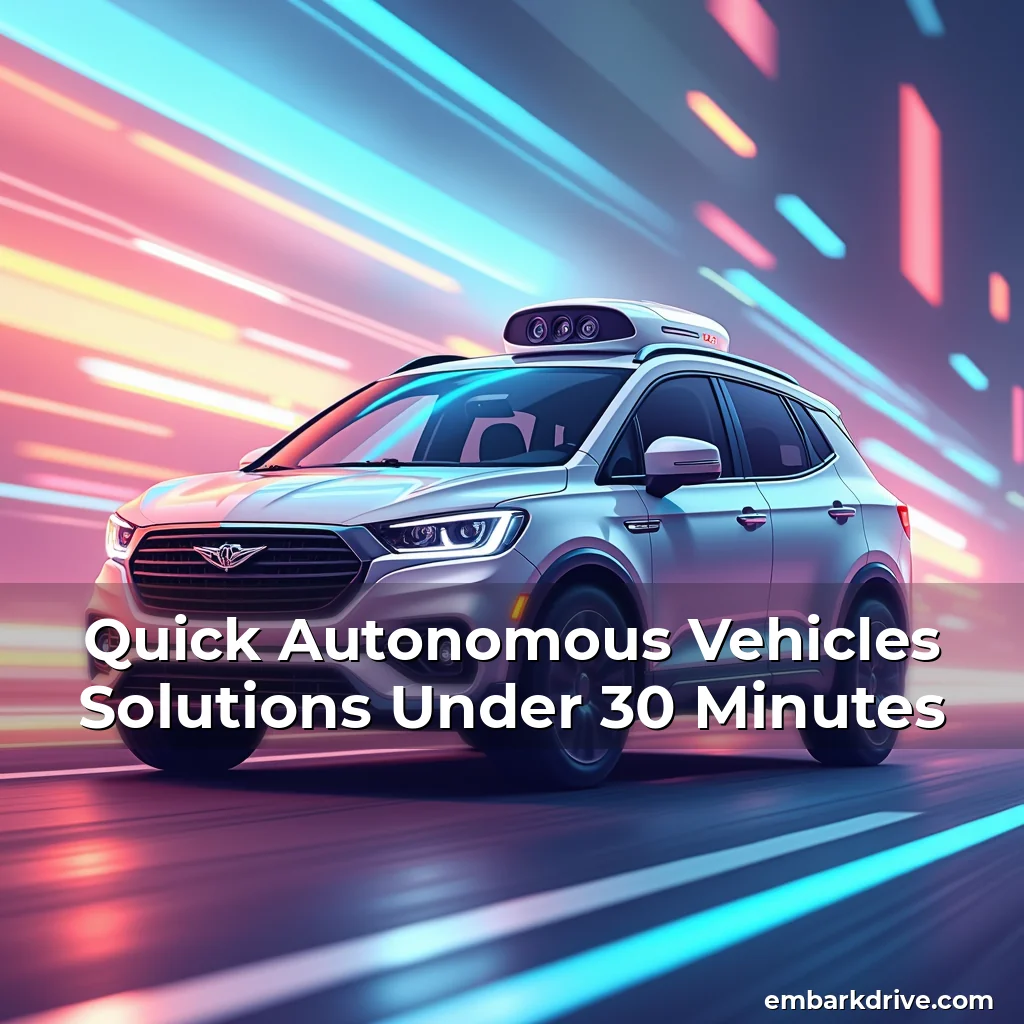
Quick Autonomous Vehicles Solutions Under 30 Minutes
In an era where technology is reshaping transportation, autonomous vehicles stand at the forefront of innovation. These self-driving cars promise safer roads, reduced traffic congestion, and greater mobility for those who cannot drive themselves.
The journey toward fully autonomous vehicles has been marked by rapid advancements in artificial intelligence, sensor technology, and machine learning algorithms that enable machines to perceive their environment accurately.
The Evolution of Self-Driving Technology
Autonomous vehicle development began decades ago with early experiments focused on basic automation features such as cruise control and automatic braking systems.
Over time, researchers have integrated sophisticated sensors including LiDAR, radar, and high-resolution cameras to create a comprehensive understanding of a car’s surroundings.
Modern autonomous vehicles utilize advanced neural networks trained on vast datasets from real-world driving scenarios to make split-second decisions effectively.
- Sensors: LiDAR provides precise distance measurements using laser pulses, while radar detects objects through radio waves even in adverse weather conditions.
- Machine Learning: Deep learning models analyze millions of miles worth of driving data to predict potential hazards and optimize route efficiency automatically.
Current State of Autonomous Vehicle Development
Todays’ most advanced prototypes are capable of navigating complex urban environments without human intervention under ideal conditions.
Companies leading this charge include Waymo, Tesla, Cruise, and traditional automakers like Ford and GM investing heavily into research partnerships.
Pilot programs operate successfully within controlled zones across cities worldwide but face challenges scaling up safely and reliably.
Benefits of Implementing Autonomous Vehicles
The primary advantage lies in enhanced road safety due to elimination of human error which accounts for over ninety percent of accidents globally.
Additionally, these vehicles can reduce traffic jams significantly by optimizing speed patterns and maintaining consistent following distances digitally.
For individuals unable to drive because of age disability or health issues access becomes dramatically improved offering newfound independence.
- Elderly Population: Seniors often experience declining vision hearing and reaction times making them vulnerable both physically and legally when operating motor vehicles.
- People With Disabilities: Adaptive technologies allow wheelchair users visually impaired individuals etc., to travel independently increasing overall quality life expectancy rates.
Challenges Facing Widespread Adoption
Despite promising progress several hurdles remain before full deployment occurs universally.
Legal frameworks need updating regarding liability determination accident investigation procedures and insurance policies tailored specifically towards driverless operation modes.
Public trust must be established through transparent testing processes rigorous safety certifications and continuous improvement cycles based upon user feedback loops.
- Regulatory Complexity: Different countries regions have varying laws governing autonomous tech requiring harmonization efforts between governments industry stakeholders.
- Cybersecurity Risks: Connected vehicles pose new threats against hacking attempts potentially compromising navigation controls communication modules critical infrastructure links.
Economic Impact on Transportation Industry
A shift towards autonomy will disrupt existing business models affecting taxi services ride-sharing platforms trucking logistics sectors among others.
New job opportunities may arise focusing areas like software engineering maintenance technicians cybersecurity experts specialized field service representatives.
However certain roles traditionally associated manual labor might diminish necessitating workforce retraining initiatives across various professions levels.
- Transportation Jobs Transformation: Truck drivers delivery personnel fleet managers could see changes responsibilities skills required adapting digital tools monitoring performance metrics remotely.
- Growth Areas: Demand surge anticipated particularly within AI developers robotics engineers automotive designers sustainability consultants aiming future-proof mobility ecosystems.
Fuel Efficiency Improvements Through Automation
Autonomous systems excel optimizing fuel consumption via intelligent acceleration deceleration techniques minimizing unnecessary idling periods enhancing engine longevity too.
Electric vehicles benefit immensely from automated charging schedules ensuring batteries maintain optimal charge states prolonging lifespan reducing replacement costs substantially.
Furthermore predictive routing capabilities enable selecting routes least likely congested thereby decreasing average commute durations energy expenditure ratios favorably.
- Environmental Benefits: Reduced emissions achieved collectively contribute positively climate change mitigation goals set forth international agreements accords.
- Cost Savings: Lower fuel expenses combined decreased wear tear mechanical components translate considerable monetary advantages long-term ownership perspectives.
Road Infrastructure Adaptations Required
To support seamless integration smart highways equipped dynamic signage variable lane markings communication nodes become essential elements modern transit corridors.
Existing infrastructure retrofitting involves substantial investment covering pavement resurfacing signal upgrades power grid expansions necessary sustain continuous connectivity demands.
Municipalities must collaborate closely private sector entities ensure standardized protocols adopted uniformly facilitating interoperability among diverse fleets operating concurrently same space.
- Smart Highways: Embedded sensors collect real-time data traffic flow patterns enabling proactive management incidents disruptions promptly mitigated before escalate problematic situations.
- Communication Networks: Robust V2X(vehicle-to-everything) architecture facilitates exchange information between automobiles pedestrians cyclists nearby structures creating cohesive transportation network ecosystem.
Ethical Considerations Surrounding Autonomous Decision-Making
Dilemma arises concerning moral choices programmed responses during unavoidable collision events prioritizing passenger safety versus protecting pedestrians cyclists alike.
Transparency behind algorithmic decision trees crucial establishing public confidence ethical accountability mechanisms put place governing organizations overseeing implementation phases rigorously.
Legislative bodies tasked defining parameters acceptable risk thresholds determining legal ramifications outcomes resulting autonomous actions taken unforeseen circumstances.
- Algorithm Ethics: Developers responsible embedding principles fairness justice equity algorithms designed avoid bias discrimination unintentionally encoded preferences favor particular demographics groups.
- Accountability Frameworks: Clear delineation responsibility occurring mishaps whether attributed manufacturer software provider end-user entity involved incident causality chain.
Future Outlook and Innovations Ahead
Ongoing R&D focuses improving perception accuracy reliability especially challenging weather conditions low visibility environments hazardous terrain types.
Integration augmented reality interfaces enhances situational awareness passengers navigating unfamiliar locations receiving contextual guidance seamlessly.
Advancements quantum computing promised revolutionize processing speeds enabling instantaneous calculations previously impossible achieve conventional hardware limitations.
- Weather Resilience: Enhanced sensor arrays coupled adaptive filtering methods address distortions caused rain snow fog ensuring robust detection recognition capabilities persistently.
- Passenger Experience Enhancements: Immersive entertainment options productivity tools personalized ambient settings transform commutes leisure activities professional tasks conducted en route destinations efficiently.
Conclusion
Autonomous vehicles represent transformative force shaping tomorrow’s transport landscape requiring collaborative effort across disciplines domains expertise.
By addressing technical regulatory societal concerns proactively we pave way sustainable safe equitable mobility solutions benefiting everyone regardless background ability drive conventionally.

news is a contributor at EmbarkDrive. We are committed to providing well-researched, accurate, and valuable content to our readers.