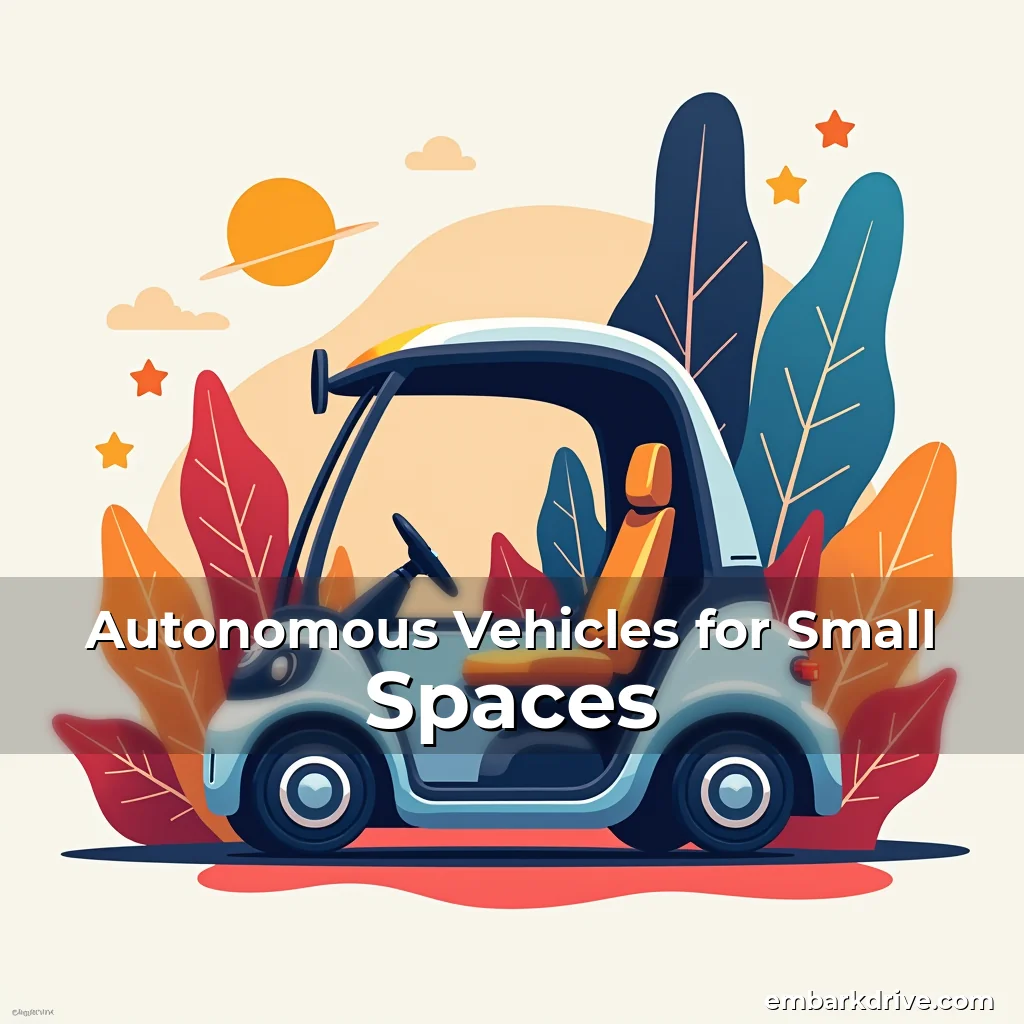
Autonomous Vehicles for Small Spaces
In an era defined by urban density and evolving mobility needs, autonomous vehicles offer a transformative solution for navigating small spaces efficiently and safely. These self-driving technologies promise to redefine transportation in cities, neighborhoods, and even compact living environments.
From smart cars designed for tight parking spots to delivery bots operating in crowded streets, the potential applications of autonomy in confined areas are vast. This guide explores how these innovations address real-world challenges faced by drivers and communities alike.
The Evolution of Self-Driving Tech in Urban Environments
The journey toward fully autonomous vehicles began decades ago, rooted in early experiments with computer vision and robotics. Today, advancements in artificial intelligence and machine learning have accelerated progress in creating systems capable of handling complex city driving scenarios.
Urban centers, characterized by dense traffic patterns and limited infrastructure, present unique challenges for autonomous navigation. Developers have focused on refining sensors, algorithms, and communication protocols specifically suited to these conditions.
Key milestones include the deployment of Level 2 and Level 3 automation features in consumer vehicles. These capabilities allow partial driver assistance, such as lane-keeping and adaptive cruise control, which serve as stepping stones toward full autonomy.
- Sensors: LiDAR, radar, and cameras work together to create real-time maps of surroundings, crucial for identifying obstacles in narrow spaces.
- Data Processing: Onboard computers analyze data from sensors at high speeds, enabling split-second decisions when maneuvering through tight quarters.
Design Innovations for Compact Mobility Solutions
Traditional vehicle designs often prioritize spacious interiors over efficiency in constrained settings. Autonomous vehicle manufacturers have addressed this by reimagining form factors tailored for small spaces.
Miniature autonomous shuttles and pod-like transporters exemplify this shift. These vehicles feature foldable components, modular seating arrangements, and streamlined exteriors optimized for urban micro-mobility networks.
Space-Saving Engineering Techniques
Engineers employ lightweight materials and electric powertrains to reduce both weight and footprint without compromising performance. Battery placement strategies also maximize interior space while maintaining safety standards.
Smart storage solutions integrate seamlessly into cabin layouts, allowing users to customize configurations based on cargo requirements or passenger counts during commutes.
Safety Advantages of Autonomy in Tight Spaces
Navigating congested environments poses significant risks due to unpredictable pedestrian behavior and reduced visibility. Autonomous systems mitigate these dangers by eliminating human error associated with distracted driving.
Advanced perception software enables precise object detection, even in low-light or adverse weather conditions common within urban landscapes. This capability enhances collision avoidance mechanisms essential for safe operation in cramped areas.
Collision prediction models continuously monitor surrounding vehicles and pedestrians, adjusting speed and trajectory accordingly. Such proactive measures greatly enhance overall road safety compared to manual driving approaches.
- Reduced Accidents: Studies show autonomous systems significantly lower accident rates by consistently applying optimal braking distances and following traffic rules.
- Predictive Analytics: Machine learning algorithms anticipate potential hazards before they occur, giving systems time to react appropriately.
Economic Implications of Autonomous Transport Systems
The integration of autonomous vehicles into everyday life carries substantial economic benefits. Reduced fuel consumption, minimized maintenance costs, and increased operational hours contribute positively to personal finances and corporate bottom lines.
Ride-sharing platforms leveraging autonomous fleets stand to benefit immensely from lowered labor expenses. Additionally, automated logistics operations streamline supply chain efficiencies, reducing overhead costs for businesses reliant on timely deliveries.
Investments in autonomous technology also stimulate job creation in fields related to AI development, cybersecurity, and infrastructure upgrades supporting connected vehicle ecosystems.
Legal Frameworks Governing Self-Driven Technologies
Governments worldwide are establishing regulatory frameworks to govern autonomous vehicle testing and deployment. These laws aim to balance innovation incentives with public safety concerns inherent in untested technologies.
Varying state regulations complicate nationwide implementation efforts. Harmonizing legal standards facilitates smoother transitions towards widespread adoption while protecting consumers from liability issues arising from malfunctions.
Insurance Models Adaptation
Traditional insurance paradigms struggle to account for liabilities tied to algorithmic failures rather than human negligence. New policies incorporating risk assessments based on software reliability metrics are emerging globally.
Countries pioneering autonomous initiatives often collaborate internationally to develop unified guidelines addressing cross-border transportation complexities posed by self-driven units traversing jurisdictions with differing regulations.
Social Acceptance and Cultural Shift Toward Automation
Public perception plays a critical role in determining the success rate of adopting new technologies like autonomous vehicles. Initial skepticism regarding trustworthiness tends to fade once individuals experience firsthand improvements offered by self-driving systems.
Education campaigns highlighting safety records, environmental benefits, and convenience factors help reshape societal attitudes toward embracing automation in daily routines.
Demographic studies indicate younger generations exhibit higher openness towards relinquishing control during journeys, suggesting future trends may favor greater acceptance rates among tech-savvy populations.
Environmental Benefits Realized Through Intelligent Transportation Networks
Autonomous vehicles promote eco-friendly practices by optimizing routes to minimize unnecessary detours contributing to carbon emissions. Efficient route calculations result in decreased fuel usage across entire fleet operations.
Electric-powered autonomous units further amplify sustainability gains by replacing fossil-fuel-dependent counterparts responsible for considerable greenhouse gas outputs annually.
Integrated charging infrastructure plans accompany vehicle deployments, ensuring seamless energy replenishment cycles aligned with peak demand periods managed via predictive analytics tools embedded within intelligent grid networks.
- Lower Emissions: Optimized routing reduces idling times and accelerates, directly cutting down pollutant levels released into atmosphere.
- Energy Efficiency: Regenerative braking systems capture kinetic energy usually lost during deceleration phases, converting it back into usable electricity stored within onboard batteries.
Fleet Management Strategies Enhancing Operational Effectiveness
Managing large-scale autonomous vehicle fleets requires sophisticated management software capable of tracking locations, monitoring health statuses, and scheduling maintenance appointments automatically.
Digital twins representing physical assets enable operators to simulate scenario outcomes virtually before implementing changes physically, thus minimizing disruptions caused by unexpected events impacting service continuity.
Real-time analytics dashboards provide instant access to performance indicators influencing decision-making processes regarding resource allocation adjustments required under fluctuating demand conditions.
Challenges Hindering Full Deployment Of Autonomous Solutions
Despite promising prospects, several hurdles remain unresolved preventing immediate large-scale rollouts of completely autonomous systems suitable for diverse geographical terrains and climatic variations encountered globally.
Technological limitations persist concerning reliable recognition of obscure signage, deciphering ambiguous hand signals from pedestrians, and accurately interpreting non-verbal cues communicated through body language expressions.
Infrastructure readiness constitutes another barrier requiring extensive modifications to existing roadsides equipped with dedicated lanes reserved exclusively for autonomous units communicating wirelessly amongst themselves.
Future Outlook And Emerging Trends In Autonomous Innovation
Ongoing research aims to overcome current shortcomings by developing next-generation neural network architectures capable of processing multidimensional sensory inputs simultaneously enhancing situational awareness capabilities dramatically.
Collaborative robotic systems working alongside humans represent upcoming frontiers where semi-autonomous assistants aid individuals performing tasks requiring dexterity beyond reach capacities achievable purely mechanically.
Integration of blockchain technologies promises secure data exchanges facilitating transparent transactions occurring between autonomous entities interacting dynamically within decentralized networks devoid central authorities governing interactions inherently.
Conclusion
As we’ve explored, autonomous vehicles hold immense potential for transforming how people move within densely populated regions and other spatially restricted contexts facing traditional transportation bottlenecks regularly experienced today.
To harness this revolution effectively, stakeholders spanning technological innovators, policymakers, and end-users must collectively invest resources ensuring equitable distribution benefits derived from advancing mobility paradigms enabled by intelligent machines assisting humanity navigate modern world more efficiently sustainably tomorrow.

news is a contributor at EmbarkDrive. We are committed to providing well-researched, accurate, and valuable content to our readers.