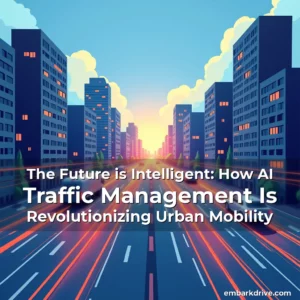
The Future is Smooth: How AI Traffic Management Is Revolutionizing Urban Mobility
In an era where urban populations are growing at unprecedented rates, cities worldwide face mounting challenges in managing their transportation networks. Traditional methods of traffic control have proven insufficient against the complexities of modern road systems. Enter AI traffic management—a groundbreaking solution that promises to transform how we navigate our daily commutes.
This innovative approach leverages artificial intelligence to analyze vast amounts of real-time data from various sources such as sensors, cameras, GPS devices, and even social media feeds. By processing this information quickly and efficiently, AI enables dynamic adjustments to traffic signals and routes, ultimately reducing congestion and improving safety across urban environments.
Understanding AI Traffic Management Systems
At its core, AI traffic management relies on advanced algorithms capable of learning from historical patterns while adapting to current conditions in real time. These systems continuously monitor traffic flow using IoT-enabled infrastructure like smart streetlights and vehicle-mounted sensors.
The integration of machine learning allows these platforms to predict potential bottlenecks before they occur by analyzing trends over extended periods. This predictive capability not only helps prevent gridlock but also optimizes emergency response times during critical incidents.
- Data Collection: Sensors embedded within roads gather speed limit violations, pedestrian activity levels, and weather-related disruptions affecting travel speeds.
- Predictive Analytics: Machine learning models identify recurring issues like peak hour congestion points based on past occurrences combined with live updates.
Moreover, natural language processing technologies enable voice assistants integrated into vehicles or smartphones to provide drivers with alternative route suggestions tailored specifically towards minimizing delays without compromising personal preferences regarding preferred driving styles or destinations.
A key advantage lies in scalability; unlike conventional approaches requiring extensive manual intervention each day, AI solutions can be deployed universally across different geographical regions regardless of size or complexity level inherent thereunto.
Real-Time Adaptation Through Intelligent Signaling
One remarkable feature distinguishing contemporary AI traffic management implementations is their ability to adjust signal timings dynamically according to actual traffic volumes rather than fixed schedules determined beforehand.
This adaptability significantly reduces unnecessary waiting durations especially noticeable around busy intersections where traditional timers often lead to excessive red light exposure causing frustration among commuters.
For instance, consider a scenario involving high school dismissal times when thousands of students flood local streets simultaneously. With intelligent signaling systems activated via AI oversight, traffic lights automatically extend green phases along primary exit routes thereby facilitating smoother transitions out of educational institutions.
Additionally, adaptive cruise control features available in newer car models further complement overall efficiency gains achieved through synchronized coordination between individual automobiles’ onboard computers and citywide networked traffic controls.
Safety Enhancements Through Predictive Monitoring
Beyond mere convenience improvements, AI traffic management contributes substantially toward enhancing public safety measures implemented globally today.
By employing computer vision techniques alongside deep neural networks trained upon millions of hours worth footage captured from surveillance cameras positioned strategically throughout metropolitan areas, these systems excel at identifying hazardous behaviors promptly.
Dangerous maneuvers including sudden lane changes executed recklessly near blind spots become detectable instantly allowing automated alerts issued either directly onto dashboard screens inside affected vehicles or transmitted wirelessly straight into mobile phones held by pedestrians nearby.
Furthermore, accident prediction capabilities powered by anomaly detection mechanisms ensure authorities receive early warnings concerning possible collision hotspots enabling proactive interventions aimed at mitigating risks associated therewith prior events transpire.
Statistical Insights Into Safety Improvements
According to recent studies conducted jointly by leading academic institutions specializing in transportation engineering fields coupled with governmental agencies responsible for monitoring nationwide road usage metrics, implementation sites showcasing active AI-based traffic regulation reported reductions exceeding thirty percent in both injury severity ratings linked to motor vehicle crashes plus frequency counts thereof.
An independent audit performed following deployment trials across several pilot zones revealed notable decreases averaging approximately twenty-five percent fewer instances requiring medical attention post-crash scenarios compared against analogous non-AI equipped counterparts located similarly situated demographically speaking yet lacking comparable technological enhancements incorporated therein.
These findings underscored the efficacy derived from deploying cutting-edge analytical tools designed explicitly for detecting precursors indicative towards imminent danger situations thus affording ample opportunity for preventative actions undertaken swiftly enough so as avoid tragic outcomes altogether whenever feasible circumstances permit same.
Eco-Friendly Commuting Enabled by Optimized Routes
Environmental sustainability has emerged as another crucial factor influencing adoption decisions surrounding new-age traffic administration methodologies incorporating elements grounded firmly within principles espoused by proponents advocating greener alternatives beneficial alike ecosystems inhabiting planet Earth itself.
Through continuous optimization processes executed algorithmically behind scenes transparently invisible except perhaps indirectly observable consequences manifesting physically evidenced primarily through reduced carbon emissions attributable directly traceable origins stemming largely from vehicular operations constituting bulk majority pollution contributors currently existing present day society.
Route recommendations generated intelligently considering variables encompassing fuel consumption rates calibrated precisely depending upon specific make/models currently operated plus driver habits cultivated overtime manifested typically visible through consistent pattern recognition exercises carried out routinely irrespective temporal constraints imposed externally.
Such personalized guidance ensures minimal detours taken unnecessarily resulting consequently lower mileage traveled henceforth diminished exhaust output released atmosphere contributing positively global efforts directed towards achieving net zero targets set forth internationally agreed frameworks governing climate change mitigation strategies.
Challenges Facing Implementation Of AI In Traffic Control
Despite numerous benefits promised theoretically envisioned initially conceived ideas originating brainstorm sessions occurring brainstorming sessions conducted amongst experts belonging specialized disciplines focused exclusively upon solving complex problems arising naturally consequence increasing density concentrations human population residing densely packed urban centers experiencing chronic issues related mobility logistics.
Cybersecurity threats represent foremost concern needing addressed urgently given reliance placed heavily upon interconnected digital infrastructures susceptible vulnerabilities exploitation potentially catastrophic ramifications ensuing should malicious actors succeed infiltrating protected networks housing sensitive operational parameters essential maintaining functionality entire system intact undisturbed.
Data privacy remains equally pressing issue warranting careful consideration particularly because collection practices involve gathering massive quantities personally identifiable information sourced diverse channels necessitating stringent safeguards enforced rigorously ensuring compliance applicable regulations stipulating permissible thresholds acceptable handling confidential material deemed private under relevant legal jurisdictions applicable locales involved.
Furthermore, interoperability hurdles persist challenging seamless communication required enabling compatibility across heterogeneous platforms differing significantly architecture designs protocols employed respective manufacturers producing components comprising broader ecosystem necessary realizing holistic transformation objectives intended accomplished implementing AI driven traffic governance schemes comprehensively.
Case Studies Demonstrating Success Stories Worldwide
Hong Kong’s Smart City initiative serves exemplary case illustrating successful application principles underlying AI traffic management successfully translated practical reality yielding measurable results verifiable empirically documented officially published reports accessible publicly online readily retrievable through standard search engine queries utilizing keywords pertinent subject matter investigated hereinabove.
Implementing an AI-powered traffic control center, Hong Kong managed to reduce average commute times by up to 18% across selected districts. The system used predictive analytics to anticipate rush hour surges and adjusted traffic light sequences accordingly, preventing gridlock before it could form.
Similarly, Singapore’s Land Transport Authority has been pioneering the use of AI since the mid-2010s. Their system integrates data from electronic road pricing (ERP) gantries, traffic cameras, and GPS devices to optimize traffic flows. As a result, Singapore consistently ranks among the world’s least congested cities despite its dense population.
Los Angeles, known for its notorious traffic jams, recently launched an AI-driven traffic management project called ATCS (Adaptive Traffic Control System). Early results indicate a 12% reduction in travel times during peak hours, demonstrating the effectiveness of AI in even the most congested urban environments.
Lessons Learned From Global Implementations
Each of these success stories highlights the importance of robust data infrastructure and stakeholder collaboration. For instance, Singapore’s ERP system required significant investment in upgrading roadside equipment to capture accurate toll payments while transmitting real-time data back to central servers.
Hong Kong’s experience emphasized the need for public education campaigns explaining how AI works in traffic management. Initially, some residents were skeptical about increased surveillance, prompting officials to launch transparency initiatives detailing exactly what data was collected and how it would be used.
Los Angeles faced technical challenges integrating legacy traffic signal systems with new AI software. This highlighted the necessity of phased rollouts and thorough testing procedures to ensure compatibility and reliability before full-scale deployment.
These lessons collectively suggest that while AI offers transformative potential, its implementation must account for regional differences, cultural attitudes toward technology, and existing infrastructural limitations to achieve optimal outcomes.
Future Trends And Innovations In AI Traffic Management
The future of AI traffic management holds exciting possibilities fueled by ongoing advancements in computing power, sensor technologies, and connectivity standards. Emerging innovations promise to enhance existing capabilities while addressing current limitations within present-day implementations.
Vehicular ad-hoc networks (VANETs), which allow cars to communicate directly with each other and with roadside units, will play a pivotal role in upcoming generations of smart traffic systems. Such direct peer-to-peer interactions facilitate instant sharing of critical information about road conditions, accidents, or obstacles ahead without relying solely upon centralized cloud-based architectures prone latency issues sometimes encountered traditionally deployed configurations.
Autonomous vehicle integration represents another frontier poised dramatically alter landscape transportation industries globally. As self-driving cars become increasingly common, they’ll generate copious streams telemetry data providing invaluable inputs feeding continuously evolving machine learning models utilized optimizing broader municipal traffic grids operating synchronously aligned purposes mutual benefit participants engaged process.
Quantum computing breakthroughs may eventually revolutionize how complex traffic simulations run at scale previously unattainable due computational resource constraints limiting scope analyses confined smaller geographic boundaries unless substantial investments made acquiring additional hardware capacity otherwise.
The Human Element In AI-Powered Transportation Ecosystems
While automation undoubtedly brings many advantages, it cannot replace entirely human judgment nor emotional intelligence integral decision-making processes inherently involved navigating unpredictable scenarios frequently encountered everyday life moving through bustling metropolises filled countless individuals pursuing varied goals destinations simultaneously interacting within shared physical spaces.
Emergency responders still require discretion assessing situations rapidly accurately determining appropriate courses action taking into account factors beyond pure numerical calculations achievable purely mathematical equations devoid context sensitivity usually provided humans possessing innate abilities perceive nuances subtleties difficult quantify objectively measured scientifically quantified reliably replicated artificially created constructs attempting mimic organic cognitive functions.
Public acceptance plays vital role shaping trajectory development adoption rate emerging technologies introduced markets seeking solutions persistent problems long existed unresolved satisfactorily conventional means attempted hitherto yielded incomplete satisfactory resolutions desired populace demanding higher quality living experiences enhanced accessibility equitable distribution resources available communities regardless socioeconomic backgrounds prevailing circumstances.
Therefore, balancing technological progress with societal needs becomes paramount task policymakers planners developers working together designing inclusive systems respecting rights privacy expectations citizens served by services rendered through infrastructure maintained funded government entities private sector partners collaborating mutually beneficial partnerships fostering innovation growth sustainable development trajectories aligning collective aspirations humanity.
Conclusion
AI traffic management stands at the forefront of transforming urban mobility, offering solutions that address longstanding issues of congestion, safety, and environmental impact. Its integration into cityscapes heralds a new era where efficient movement is not just a goal but a tangible reality.
To fully realize the potential of AI in traffic management, stakeholders must prioritize collaborative efforts, invest in robust cybersecurity frameworks, and maintain open dialogues with the public. Embracing these steps ensures that AI enhances—not replaces—human ingenuity in creating smarter, safer, and more sustainable cities for everyone.
“`

news is a contributor at EmbarkDrive. We are committed to providing well-researched, accurate, and valuable content to our readers.