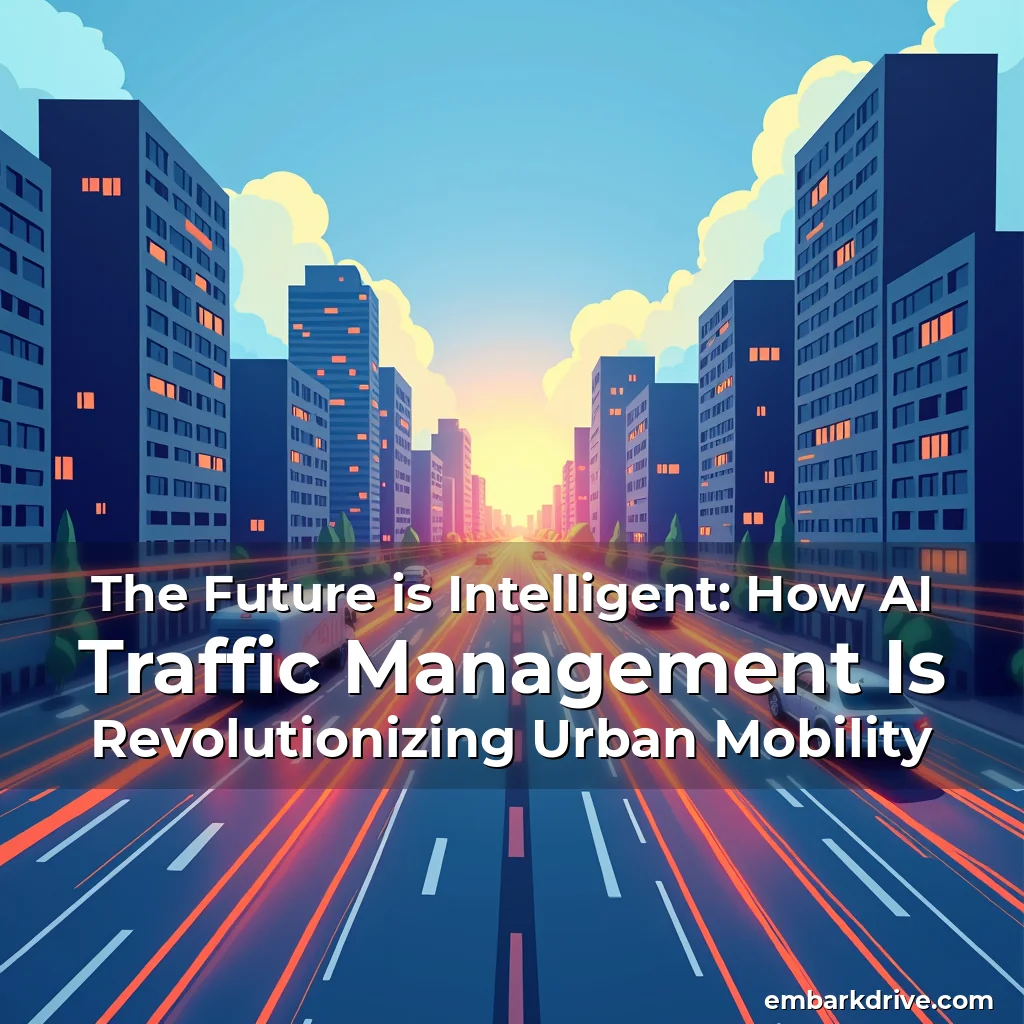
The Future is Intelligent: How AI Traffic Management Is Revolutionizing Urban Mobility
In an era where cities are growing at unprecedented rates and road congestion has become a global crisis, artificial intelligence (AI) is emerging as a transformative force in traffic management. By harnessing machine learning algorithms, real-time data analysis, and predictive modeling, AI-driven systems are redefining how we navigate our urban landscapes.
This article explores the cutting-edge advancements shaping the future of intelligent transportation networks. We’ll uncover how AI technologies optimize traffic flow, enhance safety measures, and revolutionize public transit systems across the globe.
Redefining Urban Transportation Through Machine Intelligence
The integration of AI into traffic management represents a paradigm shift from traditional static control methods to dynamic, adaptive solutions. Smart city initiatives worldwide have adopted AI-powered platforms that process vast amounts of sensor data to make instantaneous decisions.
These advanced systems can analyze patterns from thousands of sources simultaneously—including vehicle sensors, GPS devices, weather reports, and even social media feeds—to predict traffic trends before they occur. This proactive approach allows authorities to implement preventative measures rather than simply reacting to incidents after they happen.
A key advantage of AI-based traffic management lies in its ability to continuously learn and adapt. As new data becomes available, these systems refine their algorithms through deep learning techniques, improving accuracy over time without requiring manual updates or recalibrations.
Unlike conventional traffic lights that operate on fixed timers, AI-controlled intersections adjust signal timings based on current conditions. For instance, during rush hour, priority might be given to emergency vehicles while optimizing routes for regular commuters through alternative pathways.
- Data Fusion: Combines information from various sources such as CCTV cameras, radar systems, and IoT-enabled infrastructure components to create a comprehensive situational awareness picture.
- Predictive Analytics: Uses historical traffic data alongside real-time inputs to forecast congestion points and suggest optimal detours well ahead of potential bottlenecks forming.
Smart Infrastructure Integration in Modern Cities
Modern AI traffic systems rely heavily on interconnected smart infrastructure elements working together seamlessly. This includes everything from intelligent traffic signals to connected vehicle technology and digital signage displaying live travel times.
Cities implementing AI-enhanced mobility solutions often deploy specialized hardware like edge computing nodes embedded within streetlights or along highways. These devices enable local processing of critical data streams instead of relying solely on centralized cloud servers.
One remarkable application involves using computer vision powered by neural networks to monitor pedestrian movements around crosswalks. When detecting unusual activity near intersections—such as sudden stops or erratic behavior—the system can alert nearby vehicles through V2X communication protocols.
Case Study: Barcelona’s AI-Powered Mobility Network
Barcelona serves as an exemplary case study demonstrating successful implementation of AI in urban mobility. The city implemented an integrated platform combining over 600 IoT sensors strategically placed throughout its streetscape.
According to recent studies, this initiative reduced average commute times by approximately 28% compared to pre-AI deployment levels. More impressively, emergency response times saw significant improvements due to optimized routing strategies enabled by predictive analytics models.
The success story behind Barcelona highlights several crucial factors contributing to effective AI adoption in traffic management. These include strong municipal leadership committed to technological innovation combined with robust cybersecurity frameworks protecting sensitive transportation data.
Enhancing Safety Through Predictive Risk Assessment
Safety remains paramount in any discussion regarding traffic management systems. Traditional approaches often focus on reactive measures following accidents but fail to address underlying risk factors effectively.
AI introduces a proactive dimension by identifying high-risk areas prone to collisions before incidents occur. Using pattern recognition capabilities, these systems detect dangerous driving behaviors such as speeding, lane drifting, or excessive braking which could indicate imminent hazards.
Machine learning models trained on extensive datasets can accurately predict accident hotspots based on variables like time-of-day patterns, weather conditions, and road surface characteristics. This enables planners to implement targeted interventions such as adjusting speed limits or modifying intersection designs accordingly.
Furthermore, autonomous vehicle development intersects closely with AI traffic management since both domains benefit greatly from shared data ecosystems. Self-driving cars equipped with advanced perception systems contribute additional layers of visibility enhancing overall network reliability.
Optimizing Public Transit With Real-Time Adaptability
Public transportation systems face numerous challenges including fluctuating passenger volumes, unpredictable delays, and inefficient route scheduling. AI offers innovative solutions addressing each of these issues comprehensively.
Dynamic bus routing software uses real-time occupancy data collected from onboard sensors to reroute services away from overcrowded corridors towards underserved neighborhoods automatically. This ensures equitable distribution of resources while maintaining service quality standards.
Intelligent fare collection mechanisms integrated with AI algorithms help identify peak demand periods allowing operators to adjust frequencies dynamically. Such responsiveness leads to shorter wait times for passengers and improved utilization rates for fleet assets.
Moreover, predictive maintenance schedules generated via AI analysis prevent unexpected breakdowns disrupting daily operations. By analyzing component wear indicators preemptively, technicians receive alerts enabling timely repairs before failures escalate into major incidents.
Economic Implications Of AI-Driven Traffic Solutions
The economic benefits associated with deploying AI in traffic management extend beyond mere convenience gains; they represent substantial cost savings for governments and businesses alike.
Reduced fuel consumption resulting from smoother traffic flows translates directly into lower operating expenses for commercial fleets transporting goods nationwide. Additionally, decreased idling times contribute significantly to emissions reductions aligning with sustainability goals pursued globally.
Studies conducted by leading think tanks estimate that widespread implementation of AI traffic systems could potentially save economies trillions annually through increased productivity and reduced logistical costs. Businesses experience fewer delivery disruptions facilitating better inventory management practices.
Governments also benefit economically by reallocating funds previously spent on emergency response crews toward other pressing civic priorities. With fewer accidents occurring due to smarter infrastructure design choices, healthcare budgets see corresponding relief too.
Challenges And Ethical Considerations In Implementation
Despite its many advantages, adopting AI for traffic management presents complex challenges needing careful consideration. Issues ranging from algorithmic bias to privacy concerns must be addressed transparently to ensure fair outcomes for all citizens involved.
Data security stands out as particularly vital because these systems handle massive quantities of personal location information constantly. Ensuring stringent encryption protocols protects against cyber threats targeting critical infrastructure components.
Algorithmic transparency is another crucial aspect demanding attention. Citizens deserve clear explanations regarding decision-making processes used when prioritizing certain traffic types over others—a principle known as explainable AI (XAI).
Furthermore, there exists debate surrounding whether automated enforcement tools should replace human judgment entirely. While consistency may improve objectively measured metrics, some argue preserving discretionary authority helps maintain nuanced understanding inherent in policing contexts.
The Road Ahead: Innovations On The Horizon
Ongoing research continues pushing boundaries in what AI can achieve within traffic management domains. Emerging innovations promise even greater efficiencies transforming how people interact with transportation networks daily.
Quantum computing holds exciting possibilities for solving highly complex optimization problems currently beyond classical computational capacities. Its potential applications range from managing multi-modal transport hubs efficiently down to individualized personalized navigation experiences tailored precisely according to user preferences.
Advancements in drone technology coupled with AI image recognition present novel ways monitoring hard-to-reach infrastructure elements safely and affordably. Drones equipped with thermal imaging cameras can inspect bridges or tunnels regularly ensuring structural integrity without risking worker safety.
As global populations continue expanding rapidly, developing scalable solutions adaptable across different geographic regions becomes essential. Cross-border collaboration between nations sharing similar challenges will likely accelerate progress toward universally applicable best practices in intelligent mobility systems.
Conclusion
The transformation brought about by integrating AI into modern traffic management systems marks one of the most profound shifts in urban development history. From enhanced safety features to optimized resource allocation, the implications span every facet of everyday life affecting millions worldwide.
For those passionate about sustainable living or interested in participating actively within smart city projects, now is undoubtedly an opportune moment to engage meaningfully with these evolving technologies shaping tomorrow’s world today.