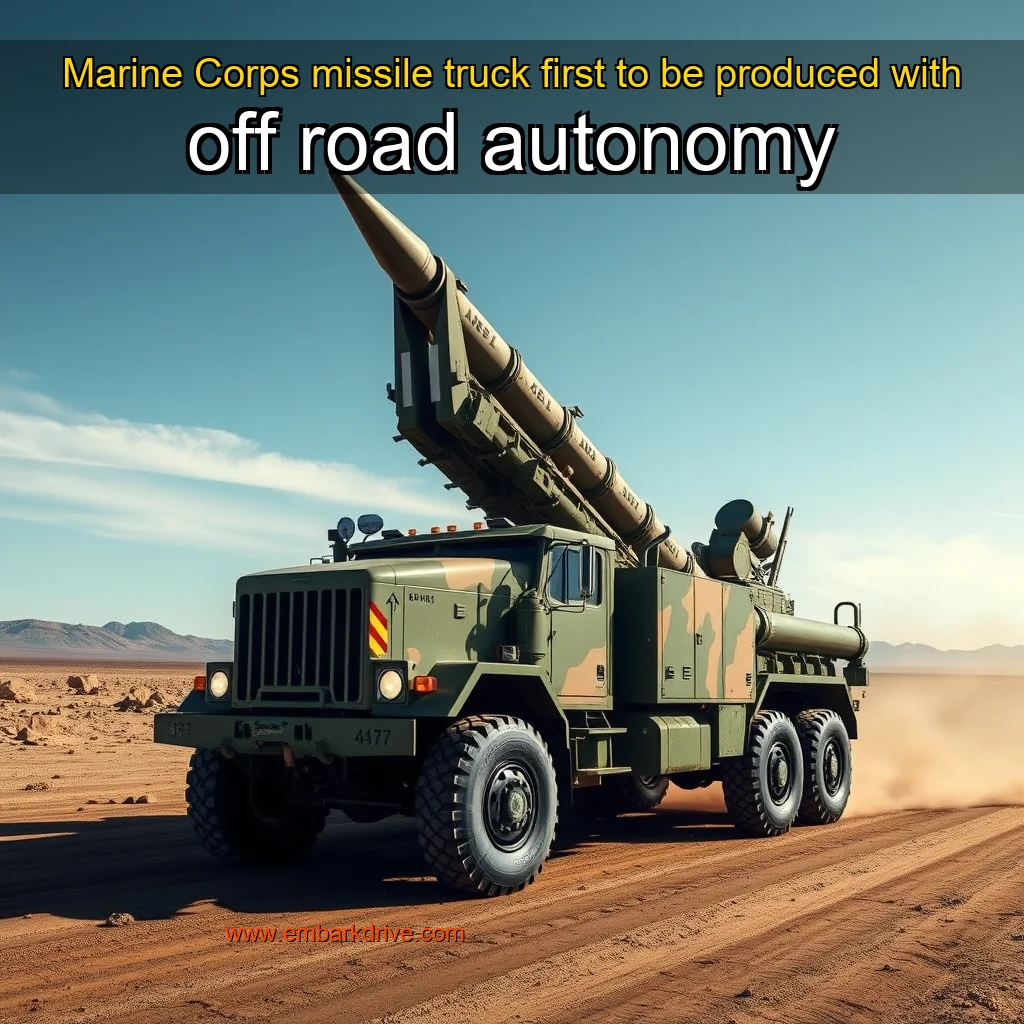
The Marine Corps has been working on the development of autonomous systems for several years, and this contract is a significant milestone in the integration of autonomous systems into the Marine Corps’ fleet.
The Autonomous Ground Vehicle
The Remotely Operated Ground Unit for Expeditionary Fires (ROGUE) is a ground vehicle designed to provide fire support in expeditionary environments. The ROGUE is equipped with a range of sensors and communication systems that enable it to operate independently in challenging terrain. The vehicle is designed to be highly autonomous, with the ability to navigate and make decisions on its own.
Key Features of the ROGUE
The Autonomy Package
The autonomy package is a critical component of the ROGUE system. It enables the vehicle to operate independently, making decisions and taking actions without human intervention.
The NMESIS System: A Revolutionary Firepower Solution
The NMESIS system is a cutting-edge, multi-mission capability designed to provide the Marine Corps with a powerful and versatile firepower solution. By integrating the ROGUE Fires design with the Naval Strike Missile, the NMESIS system offers a unique combination of capabilities that sets it apart from other tactical systems.
Key Features of the NMESIS System
Developing Efficient and Effective Combat Vehicles for the Future of War.
“We’re not even at the point where we’re testing the limits of our vehicles in the mud or in the snow,” he added. “We’re still in the early stages of development, and we’re still learning about the capabilities of our vehicles.”
The Army’s Autonomous Vehicle Program: A Step Towards the Future
The United States Army has been actively working on developing autonomous vehicles for several years now. The program, which involves multiple companies, aims to create a fleet of vehicles that can operate independently, making them more efficient and effective in combat situations. In this article, we will delve into the details of the Army’s autonomous vehicle program, its goals, and the current state of development.
The Need for Autonomous Vehicles
The Army’s autonomous vehicle program is driven by the need for more efficient and effective combat operations. Traditional vehicles are often limited by their human operators, who can be vulnerable to injury or death in combat situations. Autonomous vehicles, on the other hand, can operate without human intervention, reducing the risk of casualties and increasing the effectiveness of military operations. Key benefits of autonomous vehicles: + Reduced risk of casualties + Increased efficiency and effectiveness + Improved situational awareness + Enhanced decision-making capabilities
The Army’s Autonomous Vehicle Program
The Army’s autonomous vehicle program is a collaborative effort between multiple companies, including Forterra, General Dynamics, and BAE Systems. The program is focused on developing autonomous vehicles that can operate in a variety of environments, including urban and rural areas.