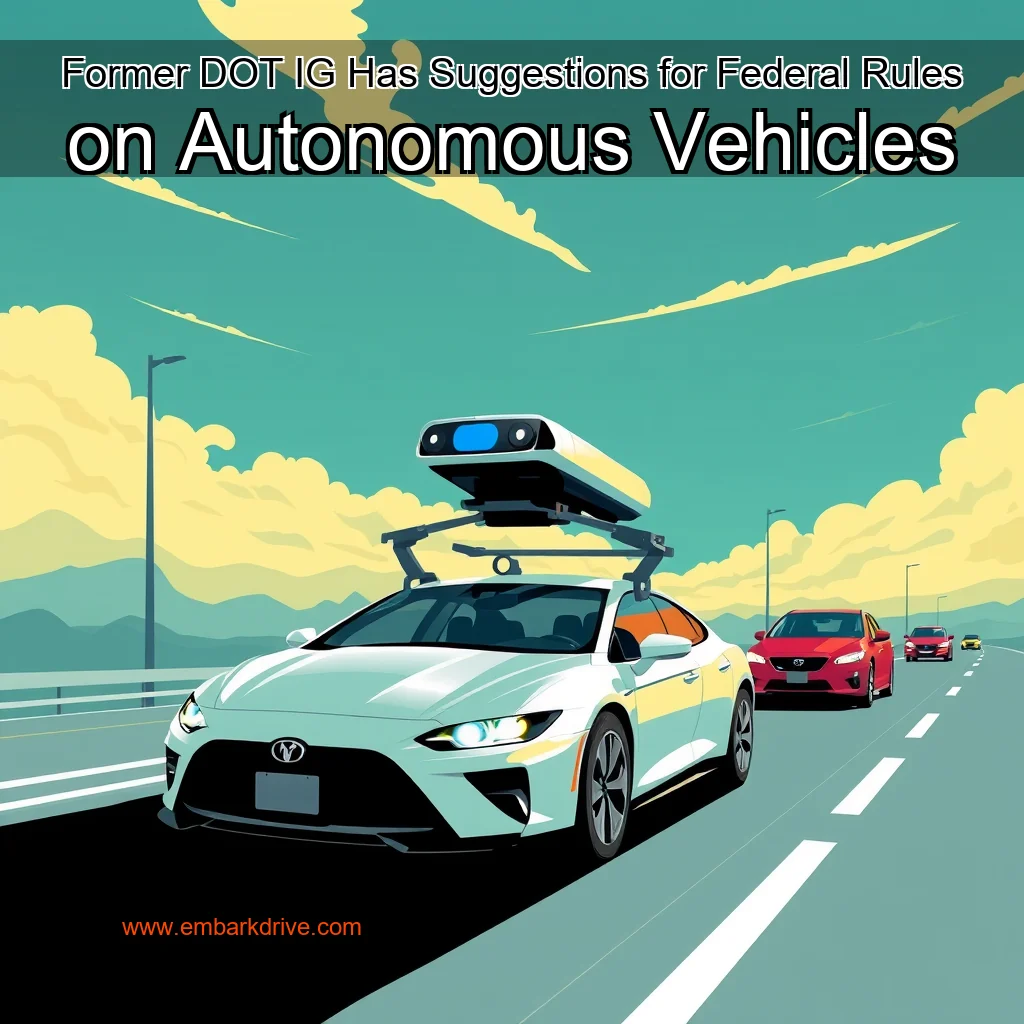
Federal Framework for Autonomous Vehicles
The US government has been grappling with the development of a federal framework for autonomous vehicles (AVs). The patchwork of state laws governing AVs has created confusion and uncertainty for companies looking to deploy these vehicles.
They claim that the lack of a unified national standard for AVs hinders their ability to develop and deploy these vehicles efficiently.
The Need for a Unified Standard
The absence of a national standard for autonomous vehicles is a pressing concern for the industry. Companies like Waymo, Tesla, and Cruise are already working on developing and testing their own autonomous vehicles. However, the varying regulations across different states and localities create a significant challenge for these companies. The lack of a unified standard makes it difficult for companies to develop vehicles that can operate in multiple states. It also creates uncertainty for investors, who may be hesitant to invest in companies that are operating in a regulatory gray area. Furthermore, the inconsistent rules can lead to confusion among consumers, who may be unsure about the safety and reliability of autonomous vehicles.
The Impact on the Industry
The absence of a national standard for autonomous vehicles has significant implications for the industry. Companies are forced to navigate a complex web of regulations, which can be time-consuming and costly. The lack of a unified standard can lead to delays in the development and deployment of autonomous vehicles. It can also lead to increased costs, as companies may need to invest in multiple testing and certification processes for each state.
Background
The Department of Transportation’s (DOT) inspector general, Michael Soskin, was a key figure in the agency’s internal affairs. As the head of the Office of Inspector General (OIG), Soskin was responsible for overseeing the DOT’s internal audit and investigation functions. His role was to ensure that the agency’s programs and activities were conducted in accordance with federal laws and regulations.
Key Responsibilities
The Investigation into the DOT’s Handling of the 9/11 Attacks
In 2001, the DOT’s Office of Inspector General (OIG) launched an investigation into the agency’s handling of the 9/11 attacks.
The Department of Transportation (DOT) is a federal agency responsible for ensuring the safety of the nation’s transportation infrastructure. The agency is tasked with setting and enforcing standards for vehicles, roads, and other transportation-related infrastructure. The DOT is also responsible for overseeing the development and implementation of new technologies, such as autonomous vehicles.
The Future of Transportation: A Complex Issue
The future of transportation is a complex issue that involves multiple stakeholders, including government agencies, private companies, and individuals. The Department of Transportation (DOT) plays a crucial role in shaping this future, and its actions can have far-reaching consequences.
The Role of the DOT
The DOT is responsible for ensuring the safety of the nation’s transportation infrastructure. This includes setting and enforcing standards for vehicles, roads, and other transportation-related infrastructure. The agency also oversees the development and implementation of new technologies, such as autonomous vehicles.
Key Responsibilities
The Impact of Autonomous Vehicles
Autonomous vehicles have the potential to revolutionize the transportation industry. They can improve safety, reduce congestion, and increase mobility for the elderly and disabled.
“If you’re trying to get a solution to a problem, you’re going to want to try different approaches until you find one that works. If you’re trying to get a student to learn, you’re going to want to try different approaches until you find one that works for them.”
The Power of Performance-Based Standards
Understanding the Shift
The traditional approach to education has long been centered around standardized testing and rote memorization. However, this method has been widely criticized for its limitations and potential drawbacks.
Safety Standards for Autonomous Vehicles: A Key to Reliable and Safe Transportation.
Safety Standards for Autonomous Vehicles
The development of autonomous vehicles has sparked intense debate about safety standards. Governments and manufacturers are grappling with the challenge of ensuring the reliability and safety of these complex systems. One potential solution is to establish clear safety standards for autonomous vehicles.
Requirements for Manufacturers
To ensure the safety of autonomous vehicles, governments could establish requirements for manufacturers. These requirements could include:
Incentives for Manufacturers
In addition to requirements, governments could also offer incentives to manufacturers to encourage the development of safer autonomous vehicles. These incentives could include:
Industry Examples
Several manufacturers are already taking steps to improve the safety of their autonomous vehicles.
However, in the case of an autonomous vehicle, the question of fault is often more complex. The issue of fault is not as clear-cut as it is with human-operated vehicles, as the vehicle’s programming and sensors may not be able to accurately determine the cause of a collision.
## Liability in Autonomous Vehicles: A Complex Issue
The concept of liability in autonomous vehicles is a complex and multifaceted issue.