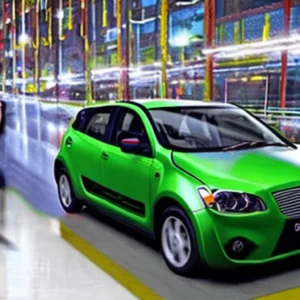
The Future Is Here: How Smart Vehicle Technology is Revolutionizing Mobility
In an era where innovation moves at lightning speed, smart vehicle technology stands as one of the most transformative forces shaping our daily lives. From self-driving cars to predictive maintenance systems, these advancements are redefining what it means to travel by road.
Smart vehicles integrate artificial intelligence, machine learning, and IoT devices to create safer, more efficient transportation experiences. As we explore the depths of this technological revolution, you’ll discover how these innovations impact everything from traffic management to environmental sustainability.
The Evolution of Intelligent Transportation Systems
The journey toward smart vehicles began decades ago with simple electronic features in automobiles. Early developments focused on improving safety through technologies like anti-lock braking systems and airbags.
With the advent of microprocessors in the late 20th century, automotive engineers could implement more complex control mechanisms. This paved the way for advanced driver assistance systems that would become integral components of modern vehicles.
Today’s intelligent transportation systems combine hardware and software solutions across various domains:
- Sensors and cameras: These enable real-time monitoring of both internal and external environments
- Vehicular communication networks: Allow cars to share data with each other and infrastructure
- Data analytics platforms: Process vast amounts of information to optimize performance metrics
The evolution continues with autonomous driving capabilities becoming increasingly sophisticated. Manufacturers now test Level 4 autonomy prototypes that can operate without human intervention under specific conditions.
Core Technologies Powering Smart Vehicles
At the heart of every smart vehicle lies a network of interconnected technologies working in harmony. Sensor fusion techniques combine inputs from multiple sources to build accurate situational awareness.
Advanced AI algorithms process sensor data continuously, identifying patterns that help predict potential hazards before they occur. Machine learning models train themselves using millions of miles worth of driving experience collected globally.
Vehicle-to-everything (V2X) communication forms another critical component. This includes V2V (vehicle-to-vehicle), V2I (vehicle-to-infrastructure), and V2P (vehicle-to-pedestrian) connections that enhance overall road safety.
Battery management systems have also evolved significantly. Modern electric vehicles use predictive algorithms to extend range while optimizing charging cycles based on route specifics and energy demands.
Enhancing Safety Through Intelligent Features
Smart vehicle technology has made significant strides in accident prevention and mitigation. Collision avoidance systems utilize radar and lidar sensors to detect obstacles up to several hundred meters away.
Automatic emergency braking engages when a collision seems imminent, reducing the severity of accidents even if the driver fails to react in time. Studies show such systems can decrease rear-end collisions by over 50%.
Drowsy driving detection uses biometric sensors and steering behavior analysis to identify fatigue early. When activated, the system alerts drivers through visual cues, audio signals, and haptic feedback mechanisms.
Adaptive cruise control maintains safe following distances automatically, adjusting speeds according to traffic flow. This feature becomes especially useful during heavy congestion scenarios.
Predictive Maintenance and Operational Efficiency
One of the most impressive benefits of smart vehicle technology is its ability to anticipate mechanical failures before they happen. Onboard diagnostics monitor hundreds of parameters in real-time, detecting anomalies instantly.
Machine learning algorithms analyze historical data patterns to forecast potential issues accurately. For example, wear indicators can predict brake pad lifespan months ahead of actual failure points.
This proactive approach reduces unexpected breakdowns dramatically. A study by McKinsey found that predictive maintenance could cut unplanned service interruptions by nearly two-thirds compared to traditional methods.
Furthermore, smart vehicles optimize fuel efficiency through dynamic route planning and engine tuning adjustments. These optimizations contribute not only to cost savings but also reduce carbon emissions significantly.
Integrating Smart Infrastructure With Automotive Innovation
The true potential of smart vehicle technology emerges when integrated with intelligent urban infrastructure. Smart traffic lights adjust timing based on real-time congestion levels rather than fixed schedules.
Connected parking systems guide drivers to available spots wirelessly, eliminating frustrating circling searches that waste both time and fuel. Some cities already deploy these systems with remarkable success rates.
Road condition monitoring systems embedded within pavement provide continuous updates on surface quality and weather-related hazards. This information helps vehicles adjust suspension settings accordingly for improved ride comfort.
Emergency response coordination improves substantially with connected vehicles. In case of an accident, automatic crash notification systems send precise location data to first responders, potentially saving precious minutes in rescue operations.
Evolving Regulatory Frameworks and Industry Standards
As smart vehicle technology advances rapidly, regulatory bodies worldwide work diligently to establish appropriate oversight frameworks. The National Highway Traffic Safety Administration (NHTSA) leads efforts in the United States with updated federal motor vehicle safety standards.
International organizations like ISO develop global technical specifications ensuring compatibility between different manufacturers’ systems. Harmonization of regulations facilitates cross-border testing and deployment of autonomous vehicles safely.
Privacy concerns remain paramount as connected vehicles collect massive volumes of personal data. Governments implement strict data protection laws requiring transparent usage policies regarding user information collection practices.
Certification processes verify compliance with cybersecurity requirements essential for protecting against hacking attempts targeting vehicular systems. These measures safeguard consumers while promoting responsible innovation.
Environmental Impact and Sustainability Benefits
Smart vehicle technology plays a crucial role in addressing climate change challenges through reduced emissions and optimized resource utilization. Electric vehicles equipped with regenerative braking recover kinetic energy normally lost during deceleration phases.
Route optimization algorithms minimize unnecessary idling times which significantly lowers greenhouse gas production associated with conventional combustion engines operating inefficiently.
Shared mobility services enabled by smart car technology offer alternatives to private vehicle ownership, decreasing total number of cars on roads while maintaining adequate transport availability for populations.
Manufacturers incorporate recycled materials extensively in production lines today, further enhancing sustainability credentials of new model releases incorporating latest smart technologies seamlessly.
The Road Ahead: Emerging Innovations in Smart Mobility
Ongoing research explores next-generation solutions poised to redefine future transportation paradigms completely. Quantum computing promises breakthroughs in processing power enabling faster decision-making for autonomous navigation systems.
Advancements in solid-state battery technology may soon replace current lithium-ion variants, offering higher energy densities while minimizing fire risks inherent with existing designs commonly used in EV applications currently.
Neural interface technologies under development aim to connect human brainwaves directly with vehicle controls, creating intuitive interaction possibilities previously unimaginable within automotive contexts.
Augmented reality windshields project vital navigational information onto glass surfaces providing enhanced visibility without obstructing natural vision too severely thereby increasing overall situational awareness effectively.
Conclusion
The transformation brought about by smart vehicle technology extends beyond mere convenience; it represents a fundamental shift towards safer, cleaner, and more efficient modes of transportation.
As these innovations continue evolving, embracing them will be key to unlocking their full potential benefits for individuals, communities, and planet alike simultaneously achieving progress across multiple dimensions concurrently.